
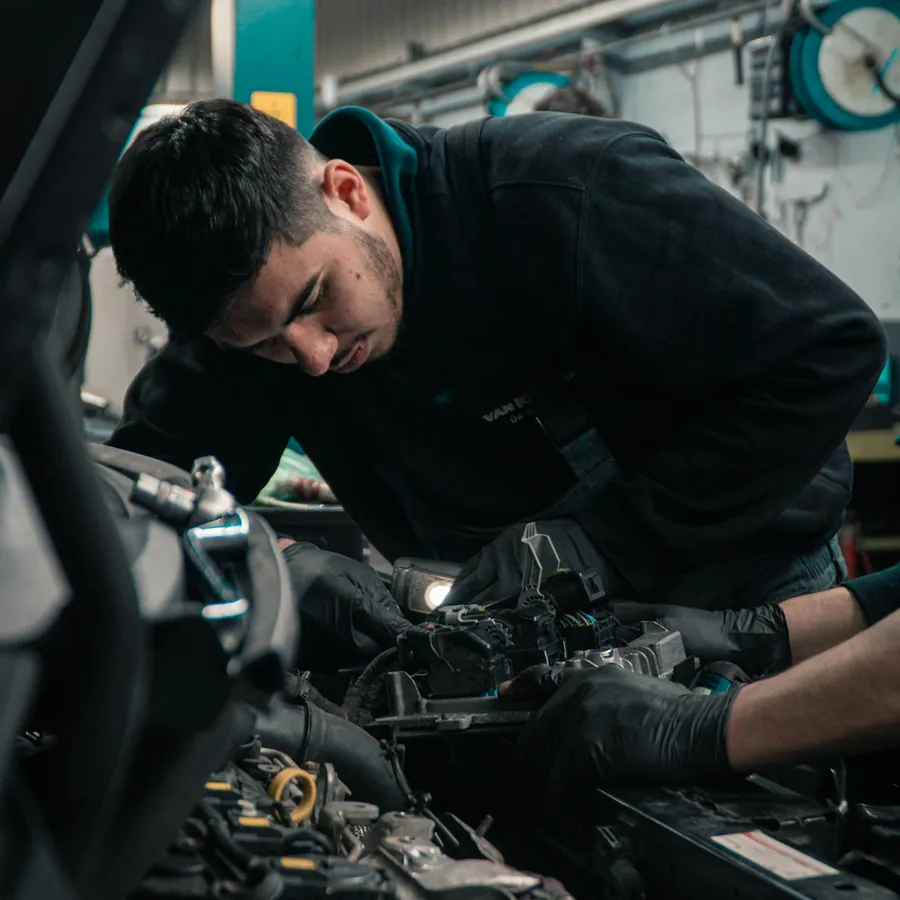
Transmission problems are some of the most feared car repairs, and some of the most oversold. Not every slip or warning light means you need a new transmission. Here’s the typical transmission repair cost in 2026, from routine service and minor repairs to a rebuild or replacement, how to tell the difference, and the questions to ask before you approve a big bill.
Transmission repair cost: from fluid service to replacement
Costs range from a few hundred dollars for routine fluid service to several thousand for a rebuild or replacement:
| Job | Typical cost | Notes |
|---|---|---|
| Fluid service (drain and fill or exchange) | $220–$360 | Routine maintenance; Jerry $221–$264, RepairPal $294–$356 |
| Minor repair (sensor, solenoid, leaking seal, cooler line) | A few hundred to about $1,000 | Depends on part and how hard it is to reach |
| Rebuild (your transmission repaired in the shop) | $2,500–$4,500 | About 8–14 hours of labor plus a rebuild kit |
| Remanufactured unit, installed | $3,500–$6,000 | Factory-rebuilt unit; usually the best warranty |
| Used / salvage unit, installed | $800–$2,500 | Cheapest, but unknown history and short warranty |
| New OEM unit, installed | $4,000–$8,000+ | Highest cost; common at dealerships |
Large trucks, SUVs and luxury vehicles sit at the top of these ranges. As one example, Kelley Blue Book’s fair price for a dealer transmission replacement on a 2026 Chevrolet Suburban in Dallas is about $7,124–$7,656. Front-wheel-drive and all-wheel-drive cars often cost more to remove and install than older rear-wheel-drive vehicles.
Signs of transmission trouble
- Slipping: the engine revs up but the car doesn’t speed up to match
- Delayed, harsh or clunky shifts, especially into Drive or Reverse
- Shuddering or vibration at certain speeds
- A burning smell, or red/brown fluid under the car
- Grinding or whining noises that change with gear or speed
- A transmission warning light or check engine light (codes like P0700 point to the transmission)
- The car won’t move in one or more gears
Start with the cheap checks
Before anyone talks about a rebuild, make sure the basics have been checked. Several common “transmission problems” turn out to be small fixes:
- Fluid level and condition. Low or burnt fluid causes slipping and harsh shifts. A leak may be the real problem.
- Stored codes. A scan can point to a sensor or solenoid instead of internal damage. See our check engine light guide.
- Software updates. Many modern transmissions have known shift-quality fixes the dealer can install.
- Engine problems. A misfire or a worn engine mount can feel like a transmission problem.
Rebuild, remanufactured or used: which is right?
| Option | Best for | Watch out for |
|---|---|---|
| Rebuild | Common transmissions with a trusted local specialist | Quality depends entirely on the shop |
| Remanufactured | Most drivers who plan to keep the car | Higher upfront cost; check the warranty length |
| Used / salvage | Older, lower-value cars | Unknown mileage; short or no warranty |
A good rule: if the car is worth much less than the repair, a used unit or selling the car as-is may make more sense. If you plan to keep it for years, a remanufactured unit with a long nationwide warranty is often the safest choice.
What drives the price up
- Vehicle type: trucks, large SUVs, luxury and performance cars use heavier, more complex transmissions.
- Drivetrain: all-wheel-drive and many front-wheel-drive layouts take longer to remove and install.
- Transmission type: modern 8-, 9- and 10-speed automatics, dual-clutch units and CVTs are more expensive than older 4- and 5-speeds.
- Extra parts: torque converter, cooler flush or replacement, mounts and fluid often add a few hundred dollars.
- Programming: many new or remanufactured units must be programmed to the car’s computer after installation.
- Location: shop labor rates vary widely between rural areas and big cities.
Ask for a written quote that lists the unit, the torque converter, fluid, programming and labor separately. That makes it much easier to compare two shops honestly.
Manual transmissions and clutches
If you drive a manual, many “transmission” problems are really the clutch. A slipping clutch, a pedal that engages high, or a burning smell when pulling away usually means a worn clutch, which is a much smaller job than replacing the transmission itself. Grinding when shifting into a specific gear points more toward internal wear.
What about CVTs?
Many newer cars use a continuously variable transmission (CVT) instead of a conventional automatic with gears. CVTs are often replaced as a complete unit rather than rebuilt, and replacement can cost as much as, or more than, a conventional automatic. Regular fluid changes with the exact fluid the manufacturer specifies are especially important for CVTs.
Transmission fluid service: is it worth it?
Yes, on the schedule in your owner’s manual. Fluid breaks down with heat and age, and old fluid wears internal parts. A $220–$360 service is cheap insurance against a multi-thousand-dollar repair. Use the exact fluid type the manufacturer specifies; transmission fluids are not interchangeable.
One caution: on a high-mileage transmission that has never been serviced, ask the shop whether a gentle drain-and-fill is safer than a power flush.
How to avoid overpaying
- Ask for the diagnosis in writing, including codes, fluid condition and road-test findings.
- Get a second opinion from a transmission specialist before approving any rebuild or replacement.
- Compare like with like: rebuild vs. remanufactured vs. used, and the warranty on each.
- Ask about the warranty: length, mileage, and whether it’s honored nationwide.
- Check your coverage. Powertrain and extended warranties often cover internal transmission failures.
Related guides
FAQ
Can I drive with a slipping transmission?
Only as far as necessary. Slipping generates heat that causes more damage, so a minor repair can become a full rebuild if you keep driving.
How long does a transmission replacement take?
Usually 1–3 days for a replacement or remanufactured unit, and longer for a rebuild, depending on parts availability.
Is a transmission flush bad for my car?
Not when it’s done on schedule with the right fluid. The risk is mainly with very old, never-serviced fluid, which is why a drain-and-fill is sometimes recommended instead.
How long do transmissions last?
Many automatics last 150,000–200,000 miles or more with regular fluid service. Heavy towing, overheating and skipped maintenance shorten their life.
Prices are estimates for general guidance, based on published 2026 data from RepairPal, Jerry, Kelley Blue Book and industry rebuild and remanufactured price data compiled by TheHowMuch. Your price depends on your vehicle, location and shop.